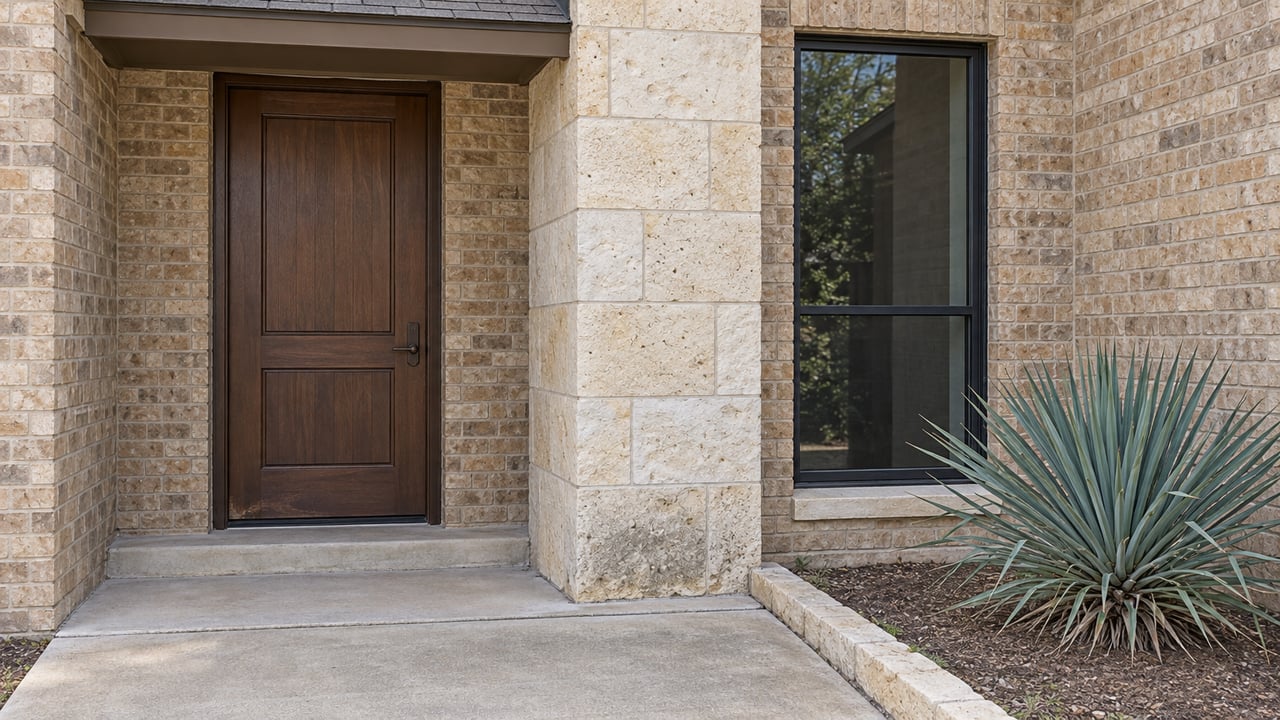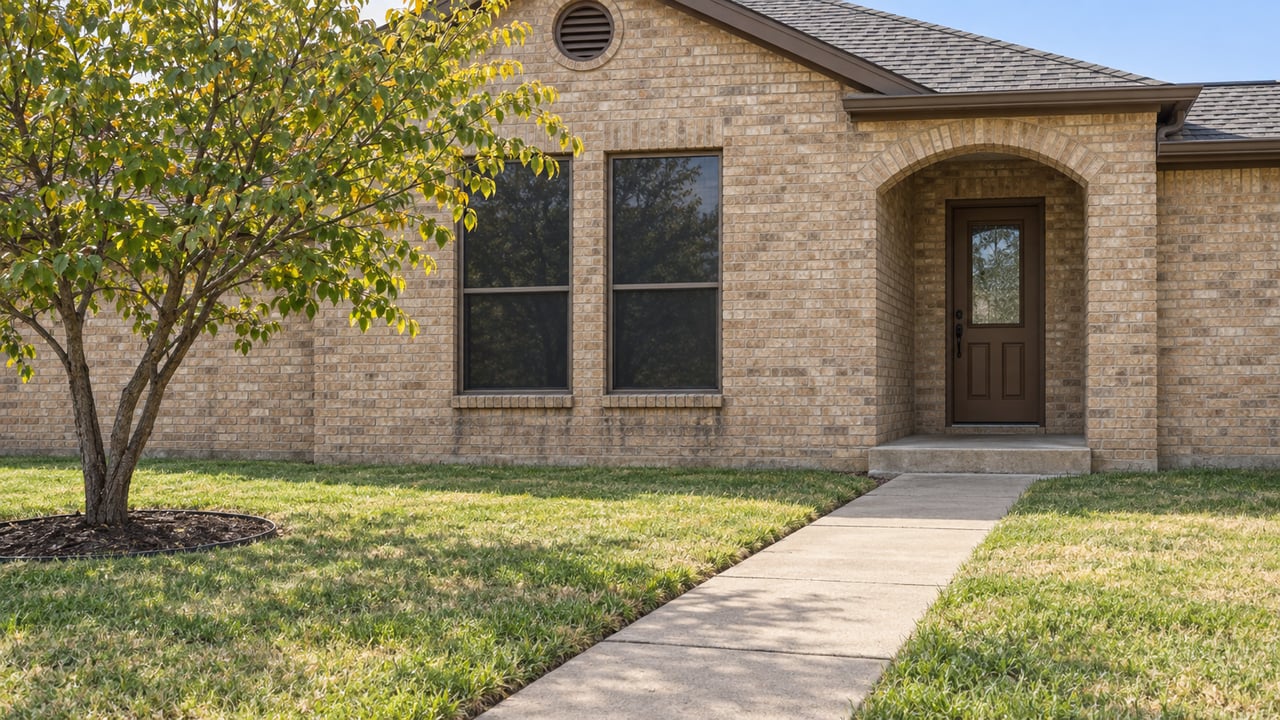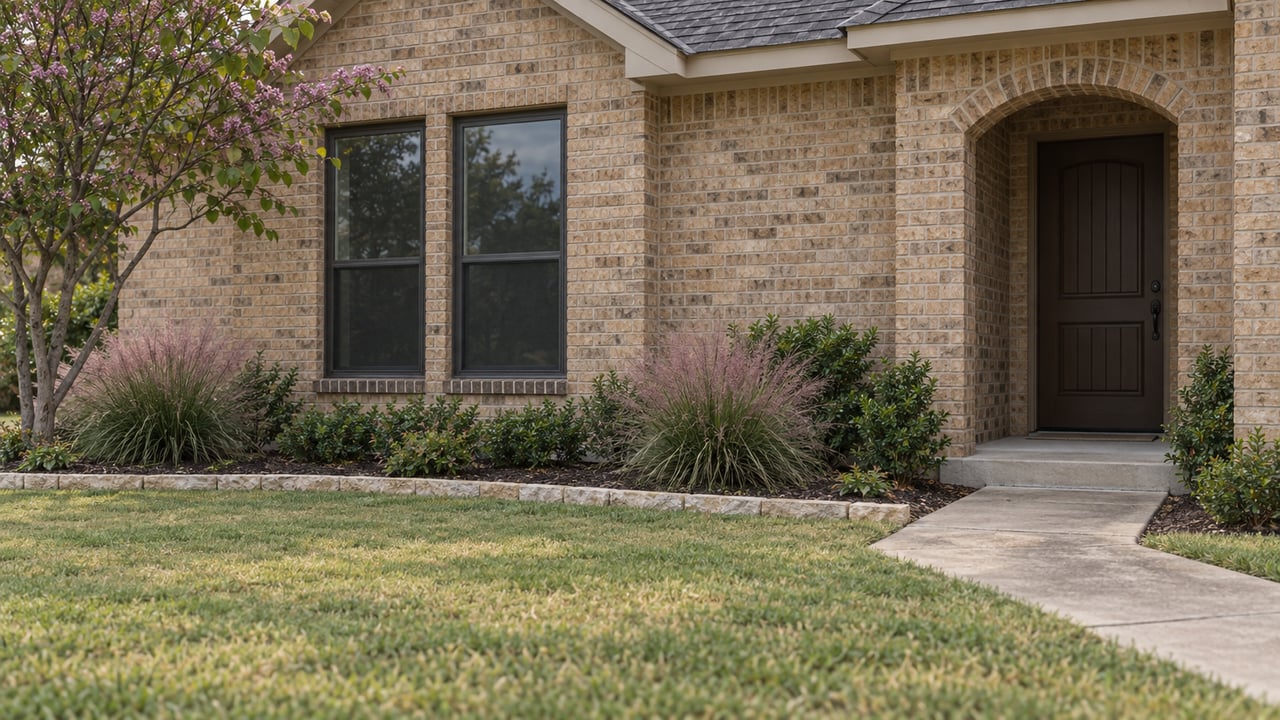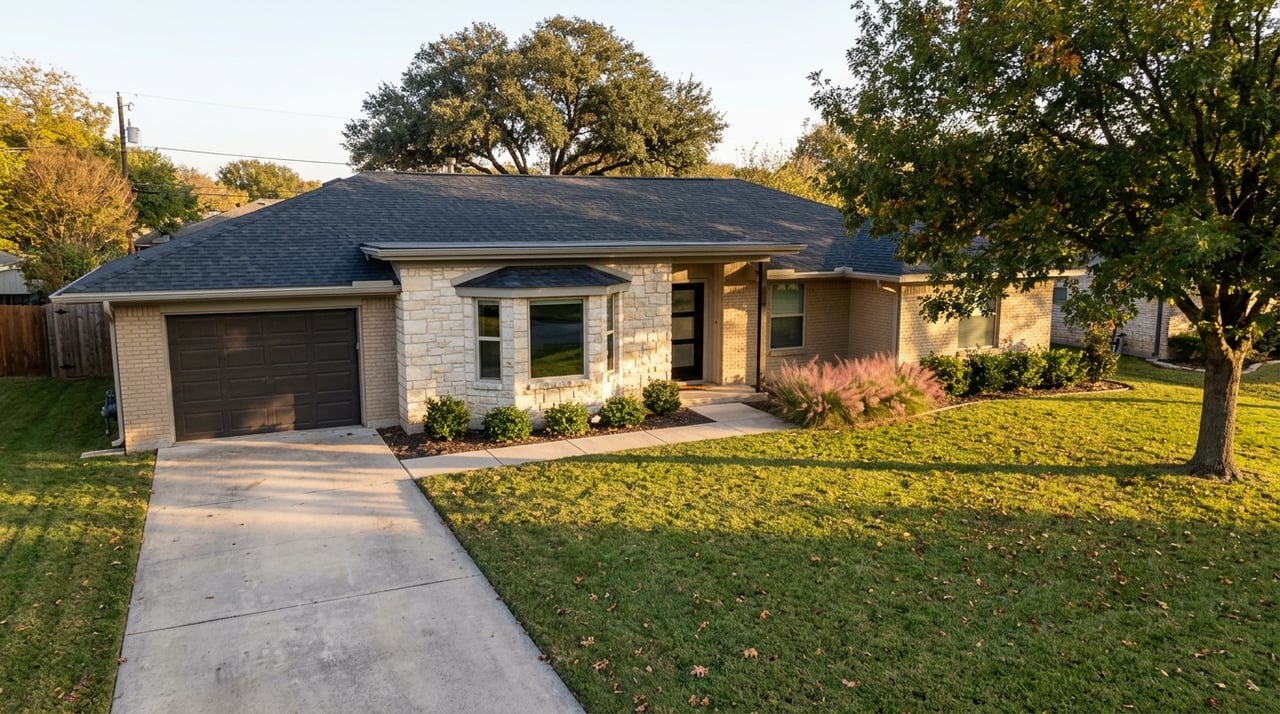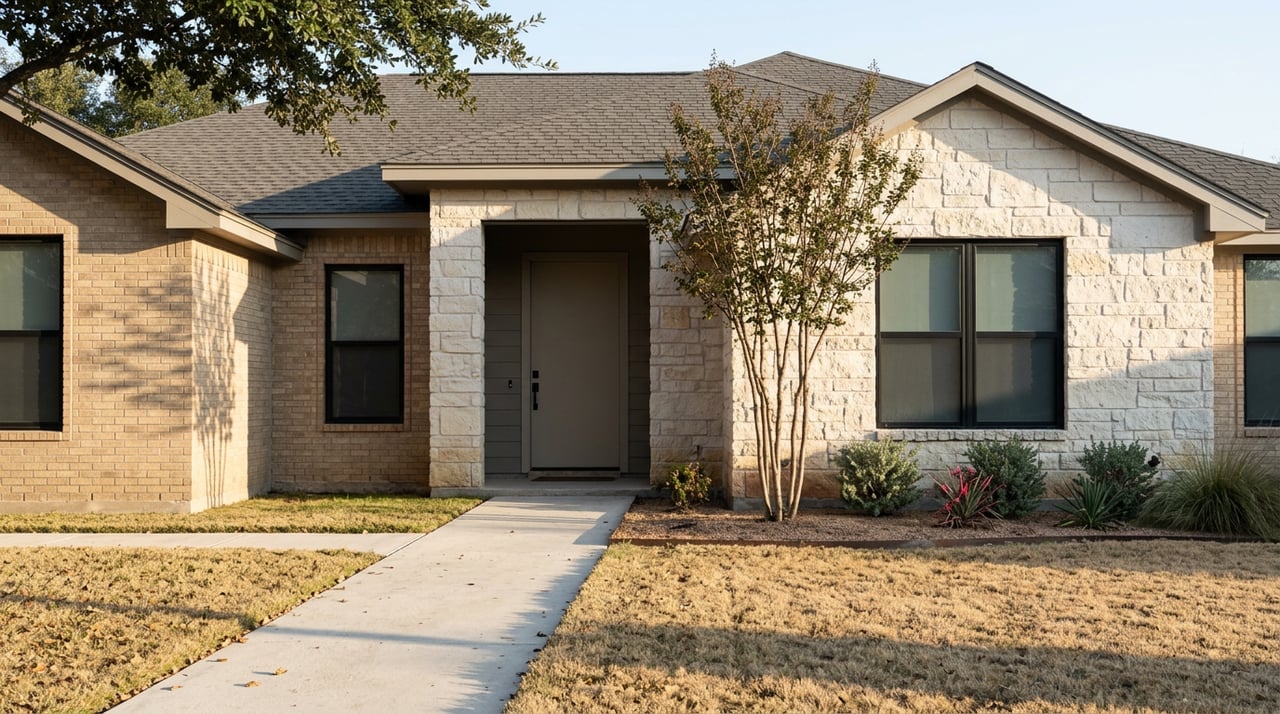
An E-5 checks orders for Fort Hood, pulls up the 2026 housing allowance table, and sees $1,695 a month with dependents. Then a portal search shows Killeen homes clustering around $228,000. The math looks clean. Allowance covers mortgage, taxes, and insurance with room to spare, and the move feels solved before the moving truck is even booked.
Then the same family widens the search ten minutes east to Harker Heights, where listings run $300,000 and up, and the same $1,695 stretches a lot less far. Same orders, same rank, same monthly check. Completely different math.
That gap is not a fluke of one family's search radius. It is the actual shape of the market right now, and almost nobody explains why the allowance behaves the same everywhere while the home prices under it do not.
One allowance, one zone, and it stops there
Basic Allowance for Housing is set by Military Housing Area, not by city limits or ZIP code. Fort Hood sits inside a single MHA that covers Killeen, Harker Heights, Copperas Cove, Nolanville, and Belton. Every service member at a given rank and dependency status draws the identical rate no matter which of those addresses they choose. For 2026, an E-5 with dependents draws $1,695 a month, up from $1,581 in 2025, a $114 jump that works out to about 7.2 percent. An E-4 with dependents draws $1,662, an E-6 draws $1,920, and an E-7 draws $2,070.
That 7.2 percent increase at Fort Hood ran well ahead of the 4.2 percent average increase applied nationally for 2026. In a market where local home prices had climbed just as fast, the extra raise would be a wash. But Killeen's median sale price moved about 6.5 percent over the same twelve months, landing near $229,000 in June 2026. So the allowance actually grew a little faster than the price it is meant to cover, at least in Killeen proper. That is the opposite of the story most PCS guides tell, which assumes rising home prices are always eating the raise before a family even unpacks.
The catch is that this math only holds inside Killeen city limits. The allowance does not know the difference between a $228,000 house and a $308,000 one, because it is not built to.
What $1,695 actually buys, three different places
| City | Recent median sale price | What the same E-5 BAH does there |
|---|---|---|
| Killeen | roughly $228,000 to $229,000 (three months ending May 2026 and June 2026 reporting) | Comfortably covers a typical mortgage payment plus taxes and insurance for many buyers at this rank |
| Copperas Cove | reported anywhere from about $222,000 to $245,000 depending on the source and reporting window | Close to Killeen's range, with the allowance still doing most of the work |
| Harker Heights | commonly cited near $308,000, with newer construction running $300,000 to $400,000 | Covers a meaningfully smaller share of the payment, pushing out-of-pocket costs higher for the same rank |
The Copperas Cove spread is worth sitting with for a second. One set of figures puts it as the cheapest of the three cities near $222,000. A separate three-month Redfin window ending in April 2026 put the median at $245,000, down 1.9 percent year over year, with price per square foot actually up 4.1 percent. Different platforms pull from different reporting periods and property mixes, so pinning an exact rank between Killeen and Copperas Cove right now is genuinely fuzzy. What is not fuzzy is that both sit well under Harker Heights, and that gap is where the real decision lives for anyone using BAH as their yardstick.
Harker Heights earns its premium honestly. It carries the newer retail corridor, including the Seton Medical Center campus and the expanding SH-195 commercial strip, plus generally newer housing stock than central Killeen. None of that shows up in the allowance table. A family choosing Harker Heights for the newer subdivision or shorter drive to retail is choosing to absorb a bigger monthly gap between BAH and payment, not a bigger allowance.
The math resets every time the table updates
Because BAH is retabulated once a year using local rent surveys, this year's favorable spread between allowance growth and Killeen price growth is not a permanent feature. It is a snapshot of 2026. A family with rate protection who is already stationed here does not see their number drop even if a future table would otherwise lower it, so existing households have some insulation from a bad year. New arrivals get whatever the current table says, for better or worse. This year the table said better, in Killeen at least.
The practical takeaway is not to assume the gap holds steady. It is to check the current table before assuming last year's advice about which city "worked" still applies, because the answer moves every January.
The market underneath the allowance is loosening too
The allowance side of this story only matters because the price side has been shifting in the buyer's favor. Killeen carried around 637 active listings in June 2026, translating to roughly 5.1 months of supply, solidly inside the four-to-six-month range that counts as a balanced market. Homes sold over the three months ending in May 2026 took an average of 69 days to close, up from 63 days the year before, and the wider Killeen-Temple metro logged a median market time of 70 days in June, a real improvement from the triple-digit stretches seen over the previous winter.
That combination matters for anyone weighing these three cities. A slower, better-supplied market gives buyers room to negotiate repairs, request price reductions on homes that have sat for a few weeks, and take a longer look at inspection findings instead of waiving contingencies to compete. It is the opposite of the environment that made BAH math feel irrelevant a few years ago, when offers above asking were routine and allowance coverage was beside the point.
Named streets and gates that actually change the calculation
For buyers narrowing a Killeen search, a few specifics come up repeatedly among local subdivisions and commute patterns:
- Trimmier Estates and the Conder neighborhood sit within a five to ten minute drive of the main gate on T.J. Mills Boulevard
- Goodnight Ranch runs about eight minutes from the Clear Creek gate
- The Chaparral Road corridor between Killeen and Harker Heights splits the difference at roughly twelve minutes to the main gate, for buyers who want newer construction without fully committing to Harker Heights pricing
- Yowell Ranch, White Rock Estates, and The Highlands at Saegert Ranch anchor the southwest quadrant, an area that tends to draw more owner-occupants than investors
- Southwest-corridor daily errands, including H-E-B and other retail, cluster along Stan Schlueter Loop and Veterans Memorial Boulevard, generally within ten minutes
None of these change the BAH number. They change how far a family has to stretch beyond it, and by how much, depending on which side of the Killeen-to-Harker-Heights line they land on.
One more thing your orders might get wrong
The installation itself was officially redesignated Fort Hood on June 11, 2025, after several years as Fort Cavazos. Plenty of paperwork, older bookmarks, and even current guides still default to the Fort Cavazos name, which can send a family searching the wrong term when they are trying to verify their BAH rate or find current housing information. Both names point to the same installation and the same Military Housing Area, so the naming confusion has no effect on the allowance itself. It is worth knowing before it costs you ten minutes of confused searching during a move that already has enough moving parts.
A few quick answers
Will my BAH drop if I already live here and a future table falls? Generally no, as long as rank and dependency status stay the same. Rate protection keeps an existing household's rate from decreasing, though new arrivals in a future year would be assigned whatever the updated table says.
Is it still called Fort Cavazos or Fort Hood? The installation was redesignated Fort Hood on June 11, 2025. You may still see Fort Cavazos on older documents, maps, or listings referring to the same base and the same BAH zone.
Does BAH cover more in Killeen than in Harker Heights because of a lower cost of living, or because of the rate table itself? Neither. The rate itself is identical across the whole Fort Hood MHA regardless of city. The difference comes entirely from local home prices, which vary by city even though the allowance does not.
If you are weighing Killeen against Harker Heights or Copperas Cove and want the current numbers run against your actual rank and dependency status rather than a portal average, Empyral Group works this exact corridor every week, on both the brokerage and the builder side. Let's make your next move. Talk to our local team.
This article is general information, not legal, tax or financial advice. Consult a qualified professional about your situation.